
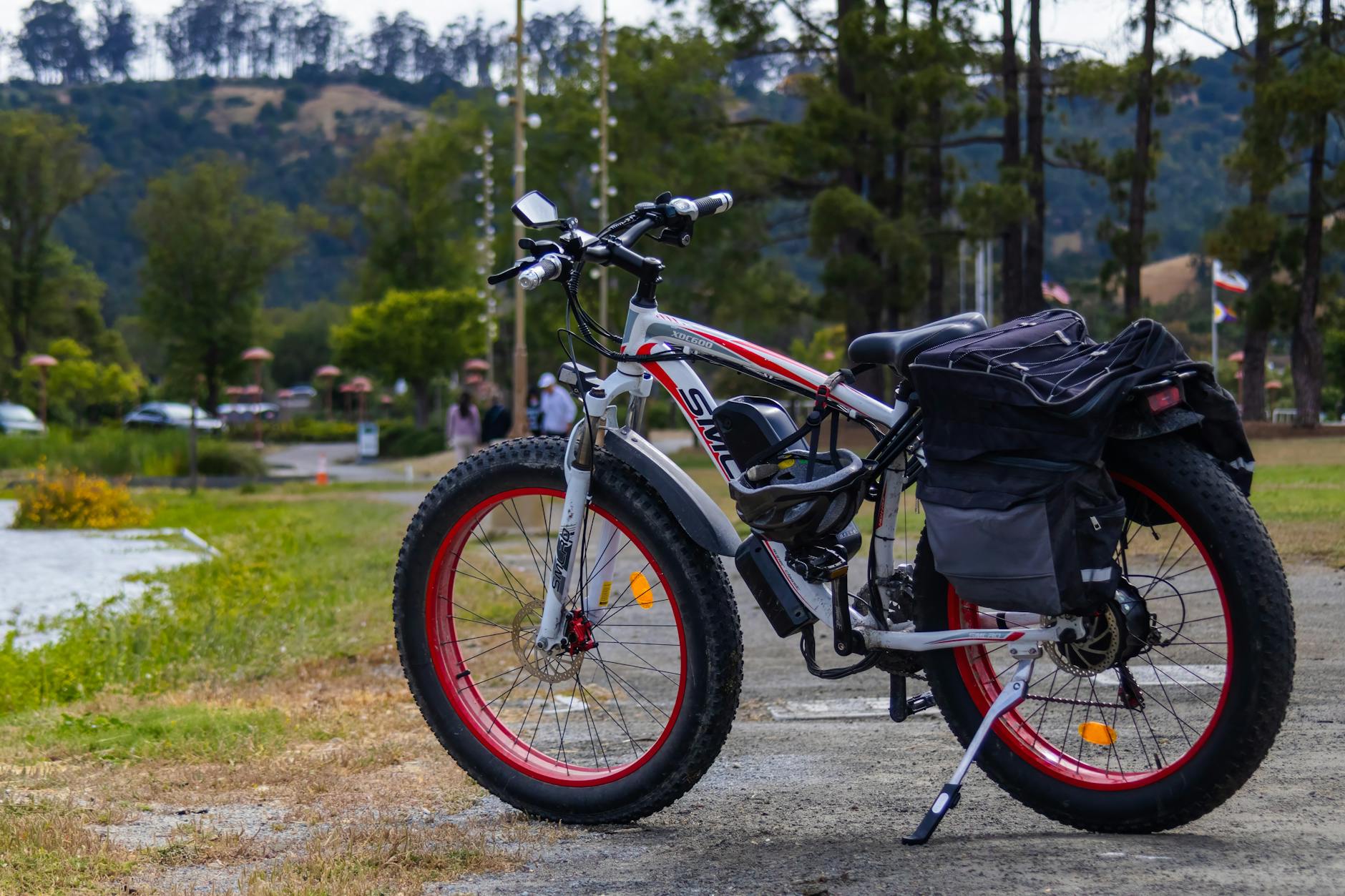
Fat Tire E-Bikes: The SUVs of the E-Bike World
Fat tire e-bikes go where skinny tires fear to roll. Sand, snow, gravel, broken pavement, forest trails. If you want one bike that handles everything, a fat tire e-bike is it.
Three bikes dominate the under-$2,000 fat tire category: the Aventon Aventure 3 ($1,999), the Himiway D3 Cruiser ($1,499), and the Rad Power RadRover 6 Plus ($1,599 MSRP, often discounted to $999-$1,299). One leads on features and ride quality. One wins on price and raw battery capacity. And one looks great on paper but carries serious brand risk heading into 2026.
Here’s how they actually compare.
Spec-for-Spec Comparison
Aventon Aventure 3 vs Himiway D3 Cruiser vs RadRover 6 Plus
data| Spec | Aventon Aventure 3 | Himiway D3 Cruiser | RadRover 6 Plus |
|---|---|---|---|
| MSRP | $1,999 | $1,499 | $1,599 ($999-$1,299 sale) |
| Motor | 750W / 1,188W peak hub | 750W hub | 750W hub |
| Torque | 80 Nm | 80 Nm | 68-80 Nm |
| Battery | 36V 20Ah (733Wh, LG) | 48V 17.5Ah (840Wh) | 48V 14Ah (672Wh) |
| Real-World Range | 34-62 mi | ~44 mi (max assist) | 25-45 mi |
| Top Speed | 20 mph (28 mph unlockable) | 20-25 mph | 20 mph |
| Weight | 78 lbs | 72 lbs | 72.5 lbs |
| Tires | 26" x 4" fat | 26" x 4" Kenda | 26" x 4" reflective |
| Brakes | Hydraulic disc | 180mm mechanical disc | Hydraulic disc |
| Sensor | Torque (cadence via app) | Cadence only | Cadence (12-magnet) |
| Gearing | 8-speed Shimano Altus | 7-speed Shimano Altus | 7-speed Shimano |
| Display | BC280 color LCD, USB-A | Backlit LCD, USB | Dual LCD |
| IP Rating | IPX5-6 | Not rated | IPX6 |
| Payload | 400 lbs | 350 lbs | 275 lbs |
| Class | Class 2 (Class 3 unlockable) | Class 2/3 | Class 2 only |
| Suspension | Fork + seatpost | None | Fork |
| UL Certified | UL 2271 (battery) | UL (electrical) | Yes |
The spec table tells part of the story. But the numbers that matter most here are sensor type, brake type, and brand stability. Let’s break those down.
Motor & Pedal Sensor: The Biggest Differentiator
The Aventon Aventure 3 is the only bike here with a torque sensor. This is a big deal at any price, and it is rare below $2,000.
A torque sensor measures how hard you push the pedals and delivers motor power proportionally. Push harder, get more assist. Ease off, and the motor backs down. The result feels natural, like riding a normal bike with superhuman legs. You stay in control, conserve battery, and get a genuine workout if you want one.
The Himiway and RadRover both use cadence sensors. These detect that your pedals are spinning and deliver a fixed level of power regardless of effort. The motor kicks in with a slight delay after you start pedaling and cuts out with a delay when you stop. It works, but the ride feels more like an on/off switch than a smooth power curve.
The Aventure 3 also lets you switch to cadence mode through the Aventon app if you prefer a more throttle-like experience. Neither of the other bikes can switch to torque sensing at any price.
For trail riding, hills, and any situation where throttle response matters, the torque sensor alone is worth the price difference between the Aventure 3 and the competition.
Battery & Range: Bigger Is Not Always Better
On paper, the Himiway D3 Cruiser wins the battery war with 840Wh of capacity. That is 15% more than the Aventure 3 (733Wh) and 25% more than the RadRover (672Wh). At $1,499, the Himiway delivers the most watt-hours per dollar by a wide margin.
But capacity alone does not determine range. The Aventure 3’s torque sensor sips power compared to cadence-based systems. It only draws what you ask for, rather than blasting full assist every time the pedals turn. Real-world tests put the Aventure 3 at 34-62 miles depending on assist level and terrain. The Himiway manages around 44 miles at max assist despite the bigger battery. The RadRover trails both at 25-45 miles with its smallest pack.
The Aventure 3 also uses LG cells with UL 2271 battery certification. Himiway’s cells are unspecified. The RadRover’s battery meets UL standards, but Rad Power has faced a CPSC warning related to 31 battery fires on older models. That history matters.
Build Quality & Smart Features
Aventon Aventure 3 stands out with its ACU (Advanced Control Unit), which adds GPS tracking, geofencing, a built-in alarm, and 4G connectivity. The first year of connectivity is included; after that it requires a subscription. The bike also gets both a suspension fork and a suspension seatpost, hydraulic brakes, an 8-speed drivetrain, and an IPX5-6 water resistance rating. The 400 lb payload capacity is the highest here by a wide margin. This is the most complete package.
Himiway D3 Cruiser cuts costs in visible places. The 180mm mechanical disc brakes are the biggest weakness. Mechanical brakes require more hand force, offer less modulation, and need more frequent adjustment than hydraulics. The cadence sensor adds lag to the pedal response. Online reviews consistently mention erratic speedometer readings and slow customer service response times. There is no IP rating for water resistance. At $1,499, you get a big battery and a solid motor, but the supporting components reflect the lower price.
RadRover 6 Plus is a well-built bike with hydraulic brakes, decent components, and the most recognized brand name in budget e-bikes. Or it was.
The RadRover 6 Plus is a capable bike at its sale price of $999-$1,299. But capability means little if the company behind it cannot support the product two years from now. Warranty claims, battery replacements, and controller repairs all depend on Rad Power staying in business and maintaining inventory.
The Verdict
Best overall: Aventon Aventure 3 ($1,999). The torque sensor, smart features, hydraulic brakes, 8-speed drivetrain, and 400 lb payload make it the most capable fat tire e-bike under $2,000. You pay more, but nothing else in this price range matches the ride quality or feature set. The LG cells and UL 2271 certification add peace of mind on the battery safety front.
Best budget pick: Himiway D3 Cruiser ($1,499). The biggest battery here at the lowest price. If you can live with cadence-only pedal assist and mechanical disc brakes, the Himiway delivers solid range and motor performance for $500 less than the Aventure 3. Upgrade the brake pads early and budget for eventual hydraulic brake calipers down the road.
Proceed with caution: RadRover 6 Plus ($999-$1,299 on sale). A good bike from a brand in crisis. If you find one deeply discounted and treat it as a no-warranty purchase, it can be a smart buy. But do not pay full MSRP for a bike backed by a company in Chapter 11. The risk is not the bike itself. The risk is what happens when you need support.