
Two Different Questions, One Confusing Answer
When someone asks “how long does an e-bike battery last?” they usually mean one of two things. Either “how far can I ride on a single charge?” or “how many years before I need a new battery?” Both questions have real answers, but manufacturers love to blur the line between best-case lab numbers and what you actually get on the road.
Let’s break down both.
Range Per Charge: Why the Claimed Numbers Are Wrong
Every e-bike listing brags about range. “Up to 80 miles!” sounds great on a product page. The problem is that number comes from tests run in pedal assist level 1, on flat ground, with a 150 lb rider, in perfect 70F weather with zero wind.
That is not how you ride. You probably use PAS 3 or higher, you weigh more than 150 lbs with your gear, your commute has hills, and the weather is rarely perfect. Wind resistance alone can cut range by 15% on a breezy day.
The real formula is simple: take the claimed range and multiply by 0.6 to 0.7. That is your actual range in typical mixed-use riding.
Range Reality Check
Spec table
dataThese numbers assume a 180-200 lb rider on mixed terrain with moderate pedal assist. If you ride full throttle everywhere, drop another 20% off the “heavy use” column.
What Affects Range the Most
Pedal assist level is the single biggest factor. Jumping from PAS 1 to PAS 5 can cut your range in half. If you care about distance, stay in PAS 2-3 and actually pedal.
Rider weight matters more than most people think. Every extra 25 lbs reduces range by roughly 5-8%. A 250 lb rider with cargo will get noticeably less range than the 150 lb test dummy.
Terrain and wind are the wildcards. A flat bike path in calm air gives you near-optimal range. A hilly commute with a headwind can eat 30-40% more battery than flat riding.
Battery Lifespan: Cycles, Years, and Reality
Now for the bigger question: how long before the battery dies for good? E-bike batteries do not just stop working one day. They slowly lose capacity over hundreds of charge cycles until the range gets too short to be useful.
Lifespan by Battery Quality
Budget batteries (300-500 cycles): Found on e-bikes under $800. These use generic or unbranded cells and typically drop below 80% capacity within 1.5 to 2.5 years of regular use.
Mid-range batteries (500-800 cycles): The sweet spot for most riders. Common on bikes in the $1,000 to $2,500 range. Expect 3 to 4 years of solid performance before noticeable degradation.
Quality cells from Samsung or LG (800-1,000+ cycles): Found on premium bikes and some well-specced mid-range models. These can last 4 to 6 years with proper care. Some riders report 1,200+ cycles before hitting 80% capacity.
What Does “One Cycle” Mean?
A cycle is one full discharge and recharge. If you ride 20 miles and use half your battery, then charge it back up, that counts as half a cycle. Most commuters use 0.5 to 1 full cycle per day, meaning a 500-cycle battery lasts roughly 2 to 4 years depending on how often you ride.
Lifespan in Plain Years
For the average rider doing 3-5 rides per week, expect 3 to 5 years before the battery degrades enough to be annoying. You will still get rides out of it after that, just shorter ones. Most people replace their battery when range drops below 60-65% of original capacity.
What Kills E-Bike Batteries
Here is what actually destroys your battery faster than normal use.
Storing it fully charged. Keeping a lithium battery at 100% for days or weeks accelerates chemical degradation. This is the number one mistake e-bike owners make. If you are not riding tomorrow, do not leave it topped off.
Storing it empty. The opposite extreme is just as bad. Lithium cells stored below 10% for extended periods can suffer permanent capacity loss. Some cells can even drop below a recoverable voltage and become useless.
Heat exposure. Leaving your battery in a hot garage, in direct sunlight, or in a car trunk during summer is brutal. Temperatures above 100F (38C) speed up degradation significantly. Keep your battery in a cool, dry place.
Daily fast charging. If your charger has a fast-charge mode, save it for when you actually need it. Fast charging generates more heat and puts more stress on cells. Using the standard charger for daily top-ups is much gentler.
Charging Habits That Actually Help
Good habits are simple and they cost nothing.
Store between 40% and 80% charge. This is the goldilocks zone for lithium cells. If you are putting the bike away for a week or longer, charge to about 60% and leave it. Check every 4-6 weeks during long storage and top back up to 60% if it has drifted down.
Charge after it cools down. If you just finished a long ride, give the battery 15-20 minutes to cool before plugging in. Charging a hot battery increases wear.
Bring it inside during winter. If your garage drops below freezing, remove the battery and store it indoors. Charging a frozen battery can cause permanent damage. Let it warm to room temperature before plugging in.
Replacement Costs: What to Expect
Eventually every battery needs replacing. Here is what that looks like financially.
OEM replacements from the original manufacturer typically cost $400 to $800 for a 500-700 Wh battery. This is the safest option because you know the battery management system (BMS) is compatible with your bike’s controller.
Aftermarket batteries range from $300 to $600 and can be a good deal if you buy from a reputable seller. Look for batteries with Samsung, LG, or Panasonic cells and a BMS that matches your bike’s voltage and connector. Avoid no-name packs from random marketplace sellers. A bad BMS can cause fires.
Rebuilds and re-celling cost $200 to $400 if you can find a local shop that does battery work. They replace the worn cells inside your existing case, keeping the original BMS and connector. This is a solid option for older bikes where OEM packs are discontinued.
How to Check Your Battery’s Health
You do not need fancy tools to get a rough idea of battery condition.
The ride test. Charge to 100%, reset your trip meter, and ride your usual route at your usual assist level. Compare the distance you get to what you got when the bike was new. If you are getting 30% less range or more, the battery is noticeably degraded.
Voltage check. With a basic multimeter, measure the battery voltage when fully charged and after a ride. A healthy 48V battery should read about 54.6V at full charge. If it tops out at 52V or lower, capacity has dropped significantly.
Capacity test (advanced). Some chargers and battery monitors can measure actual watt-hours delivered during a full charge cycle. Compare that to the rated capacity on your battery’s label. If a 672 Wh battery only takes in 450 Wh, you have lost about a third of your capacity.
Frequently Asked Questions
FAQ
+How often should I charge my e-bike battery?
+Can I leave my e-bike battery plugged in overnight?
+When should I replace my e-bike battery?
+How should I store my e-bike battery for winter?
+Can I upgrade to a bigger battery?
The Bottom Line
Your e-bike battery will last 3-5 years with normal use and basic care. Real-world range is about 60-70% of whatever the marketing says. The single best thing you can do is stop charging to 100% every time and keep the battery stored between 40-80% when you are not riding. That one habit alone can add years to your battery’s life.
When it does finally wear out, budget $300-$800 for a replacement. Not cheap, but still way less than a year of gas.
Read next
E-Bike Battery Replacement and Recall Checklist
Check recalls, replacement costs, compatibility, and when to stop riding.
E-Bike Maintenance 101
Simple upkeep checks that keep an e-bike safer and easier to own.
Find an E-Bike Dealer or Service Shop
Search local shops before buying a replacement battery or chasing electrical issues.
Best E-Bikes Under $2,000 (2026)
Compare value picks if replacing the whole bike makes more sense than a new pack.
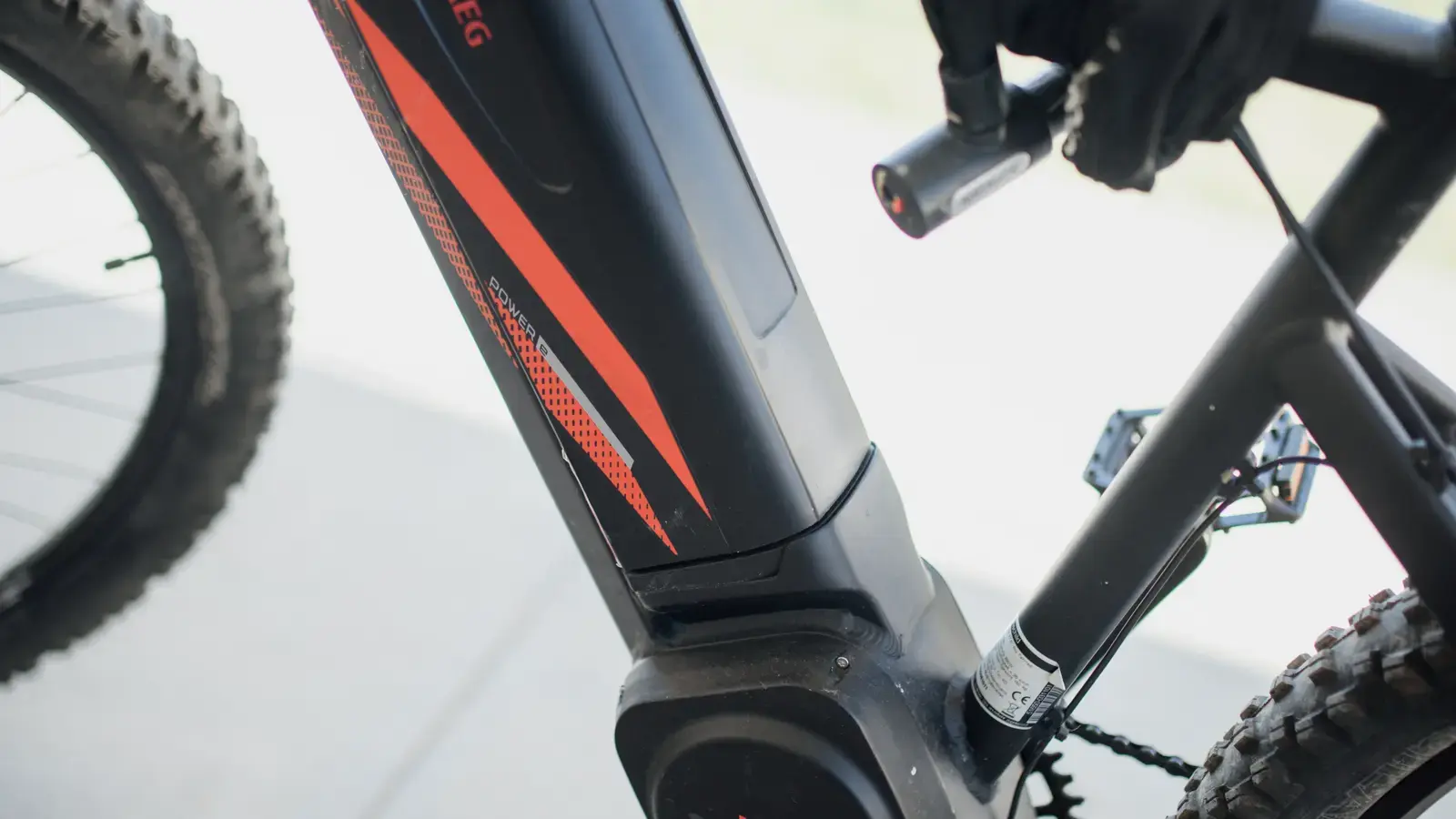
Photo by Robert So on Pexels.