
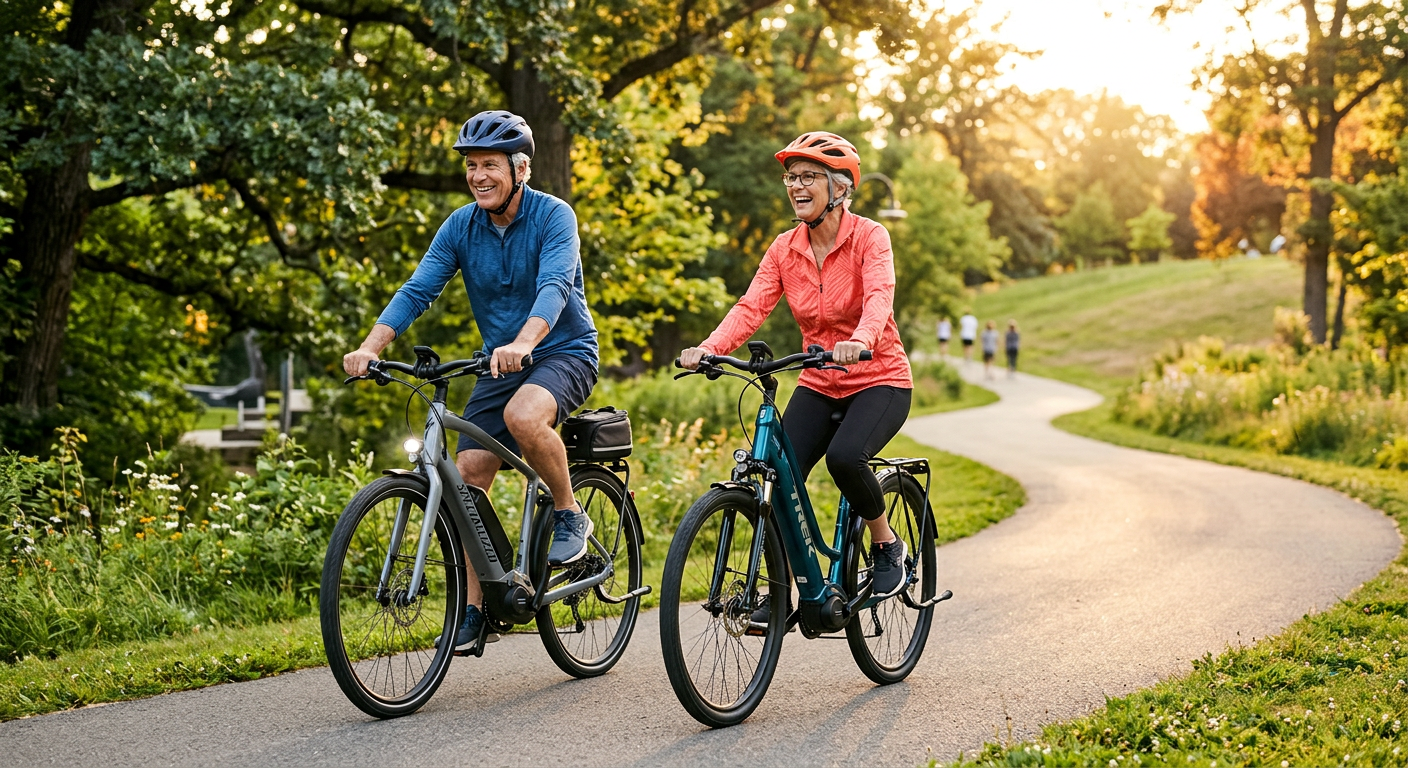
The Aventon Pace 500.3 Step-Through is our top recommendation for most riders — stable geometry, a comfortable upright seating position, and enough power for hills without being intimidating. At ~$1,399, it hits the sweet spot between quality and value. If comfort is your top priority and budget is flexible, the Gazelle Medeo T10 HMB at ~$3,499 is the smoothest, quietest ride here by a wide margin.
What Actually Matters (And What Doesn’t)
Most e-bike review sites rank bikes by wattage and top speed. That tells you almost nothing about how a bike actually feels to ride day to day. Here’s what to pay attention to — and what you can safely ignore.
The Features That Matter
Step-through frame height. This is the single most important spec on this list. Measured in inches from the ground to the lowest point of the frame’s top tube, it determines whether you can mount and dismount confidently. Look for standover heights under 18 inches. Under 15 is ideal. If you have a hip replacement or limited flexibility, this number is non-negotiable.
Total bike weight. You will need to lift this bike at some point — into a car, up a curb, over a threshold. Every pound above 55 lbs makes that harder. If you don’t have someone to help load it, weight should be near the top of your list. A lighter bike is also easier to control at walking speed and in parking lots.
Pedal assist startup behavior. This is the most overlooked spec in the entire e-bike industry. Some bikes start with a lurching jolt when you first pedal. Others ease in smoothly. The difference matters enormously for balance and confidence. Torque sensors provide smooth, proportional power. Cadence sensors can be jerky at startup, especially on the lowest assist level. Ask about this during test rides.
Ask every dealer: “How does pedal assist level 1 feel from a dead stop?” If the bike lurches forward the moment you start pedaling, that’s a cadence sensor with poor tuning. Torque-sensor bikes ramp power proportionally to how hard you push — much smoother and more predictable. For riders prioritizing stability and confidence, a torque sensor is worth paying extra for.
Brake type. Hydraulic disc brakes require significantly less hand strength than mechanical disc or rim brakes. If you have arthritis or reduced grip strength, hydraulic brakes aren’t a luxury — they’re a safety feature. One or two fingers is all it takes.
Tire width. Wider tires (2.0” and above) provide more stability, better bump absorption, and more forgiving handling on loose surfaces like gravel or sand. The trade-off is a slightly heavier bike. For most riders here, wider is better.
Wheel size. 26-inch wheels track straighter and feel more planted than 20-inch wheels, especially at speed. The smaller wheels found on folding bikes feel twitchier and amplify bumps. Unless portability is your top concern, stick with 26” or 27.5”.
What Doesn’t Matter Much
- Peak motor wattage. A 750W motor sounds impressive. But a well-tuned 250W Bosch mid-drive will outclimb a cheap 750W hub motor on a steep hill. Wattage without context is marketing noise.
- Top speed. If you’re buying for comfort and stability, you’re not racing to 28 mph. Class 1 bikes top out at 20 mph with pedal assist, and that’s plenty for most riding.
- App connectivity. Nice to have. Not a reason to choose one bike over another. You’ll use it twice and forget it exists.
The Picks
We selected these bikes based on real-world rideability for adults who prioritize comfort, confidence, and ease of use. Every bike here has a step-through frame option.
Best Overall
Aventon Pace 500.3 Step-Through
Best OverallThe Pace 500.3 gets the fundamentals right. The torque sensor delivers smooth, progressive power from a standstill — no lurching, no surprises. The step-through frame clears at 16.5 inches, low enough for confident mounting even with limited hip mobility. Hydraulic disc brakes stop the bike with minimal hand effort.
It also has a throttle, which is genuinely useful for getting through intersections from a stop or walking the bike up a driveway. The 672 Wh battery is removable, so you can bring it inside to charge instead of parking your bike next to an outlet.
The only real downside is weight at 55 lbs. Loading it solo into a car trunk takes effort. If weight is a dealbreaker, look at the Tenways CGO600 Pro below.
Best Premium Comfort
Gazelle Medeo T10 HMB Step-Through
Best PremiumThe Gazelle Medeo is what happens when a 130-year-old Dutch bike company builds an e-bike. The Bosch Performance Line mid-drive is the gold standard for smooth, intuitive pedal assist. It reads your pedaling force dozens of times per second and responds instantly. You genuinely forget it’s electric.
The Gates Carbon belt drive replaces the traditional chain. No oiling, no grease on your pants, no chain stretch. Belt drives last 15,000–20,000 miles with zero maintenance. For riders who don’t want to fuss with drivetrain care, this alone justifies the price premium. See our maintenance guide for more on what e-bike upkeep actually involves.
The battery is internally mounted, giving the bike a clean look and lower center of gravity. The standover height of 15.4 inches is among the lowest here. It’s a Class 1 bike — pedal assist only, 20 mph max — which keeps things calm and predictable.
The price is the barrier. At ~$3,499, it costs more than double the Aventon. But if you’ll ride daily and keep the bike for five or more years, the Bosch motor reliability and belt drive longevity make the math work.
Best Budget Pick
Lectric XP Lite 2.0
Best BudgetThe XP Lite 2.0 proves you don’t need to spend $1,500 to get a safe, rideable e-bike. At 46 lbs, it’s the lightest bike on this list — light enough for most riders to lift into a car without assistance. The torque sensor provides the same smooth startup behavior as bikes costing twice as much.
The compromises are honest. Mechanical disc brakes require more hand force than hydraulics. The 374 Wh battery limits range to roughly 25–40 miles depending on assist level and terrain — fine for errands and neighborhood rides, but not enough for all-day adventures. And 20-inch wheels feel less planted than the 26-inch wheels on the other picks.
For riders buying their first e-bike and unsure whether they’ll stick with it, the XP Lite 2.0 is the lowest-risk entry point. If you want help evaluating other first-bike options, our guide on how to choose your first e-bike covers the decision framework in detail.
Best for Stability
Rad Power RadRover 6 Plus Step-Through
Best StabilityIf confidence and stability are the top priority, the RadRover 6 Plus delivers something the other bikes here can’t: 4-inch fat tires that grip pavement, gravel, grass, and light sand like the bike is on rails. The contact patch of a fat tire is dramatically wider than a standard tire. You feel the difference immediately — the bike simply doesn’t wander.
The low 15.8-inch standover and wide, stable platform make mounting and dismounting straightforward. The 750W motor handles hills without straining. Hydraulic disc brakes stop the heavier bike confidently.
The honest trade-off is 62 lbs. This is a heavy bike. Loading it into a vehicle solo is a two-person job for most riders. The cadence sensor also isn’t as smooth from a stop as the torque sensors on the Aventon and Lectric — it can feel slightly lurchy at PAS level 1. Start in level 1 and pedal gently to manage this.
Rad Power’s US-based customer support and network of mobile repair technicians is a real advantage. If something goes wrong, you’re not shipping the bike to a warehouse and waiting weeks.
Best Lightweight
Tenways CGO600 Pro
Best LightweightThe CGO600 Pro is the anti-e-bike. At 37 lbs, it weighs less than many non-electric bikes. You can lift it with one hand. Carry it up a flight of stairs without breaking a sweat. Load it into any car without help.
It achieves this partly through a Gates Carbon belt drive (no chain, no grease, no maintenance) and partly by using a smaller 360 Wh battery. Range is adequate for most daily rides but won’t cover marathon distances. The torque sensor and hydraulic disc brakes are premium features you’d expect at twice the price.
The Tenways doesn’t come in a traditional step-through frame, but the frame geometry sits low enough that mounting isn’t difficult for most riders. If weight is the priority and a step-through isn’t strictly required, this bike deserves serious consideration.
No throttle. Class 1 pedal assist only. For riders who want the bike to feel like a bike — just one that flattens hills — that’s a feature, not a limitation.
Best Trike Option
Addmotor Grandtan E Trike
Best TrikeIf balance is a serious concern — whether from a medical condition, inner ear issues, or simply not feeling confident on two wheels — a three-wheeled e-trike removes that variable completely. You cannot tip over at a stoplight. You don’t need to put a foot down. The bike stands on its own.
The Addmotor Grandtan E delivers a 960 Wh battery (the largest on this list by far), enough for genuinely all-day riding. The rear basket is included and practical for groceries and errands. It rides differently than a two-wheeled bike — you lean into turns less and the turning radius is wider — but the learning curve is short.
At 82 lbs, this is not a bike you’ll lift anywhere. Plan for a garage or ground-floor storage. The mechanical brakes and drum rear brakes require more hand force than hydraulics, which is the main compromise at this price point. The Buzz Cerana E-Trike (~$1,999) is a comparable alternative worth test-riding side by side.
Head-to-Head Comparison
All Picks Compared
| Model | Price | Weight | Standover | Motor | Range | Brakes | Throttle | Sensor Type |
|---|---|---|---|---|---|---|---|---|
| Aventon Pace 500.3 ST | ~$1,399 | 55 lbs | 16.5" | 500W hub | 40–60 mi | Hydraulic disc | Yes | Torque |
| Gazelle Medeo T10 HMB | ~$3,499 | 52 lbs | 15.4" | Bosch mid-drive | 35–70 mi | Hydraulic disc | No | Torque |
| Lectric XP Lite 2.0 | ~$799 | 46 lbs | 17.5" | 300W hub | 25–40 mi | Mechanical disc | No | Torque |
| RadRover 6 Plus ST | ~$1,499 | 62 lbs | 15.8" | 750W hub | 25–45 mi | Hydraulic disc | Yes | Cadence |
| Tenways CGO600 Pro | ~$1,499 | 37 lbs | Varies | 350W hub | 30–50 mi | Hydraulic disc | No | Torque |
| Addmotor Grandtan E | ~$2,199 | 82 lbs | N/A | 750W hub | 45–65 mi | Mech disc + drum | Yes | Cadence |
Step-Through vs Step-Over: There’s No Performance Difference
Let’s address this directly. Some riders — particularly men — hesitate to buy a step-through frame because of outdated associations with “women’s bikes.” That’s worth unpacking for exactly one paragraph before we move on.
Step-throughs and step-overs use the same motors, batteries, drivetrains, and brakes. The frame geometry difference has zero measurable impact on speed, range, climbing ability, or handling. Professional bike fitters will tell you that frame stiffness differences between modern step-throughs and step-overs are negligible for e-bike riding.
Step-through frames are the fastest-growing frame style across all age groups and genders. In the Netherlands — the most bike-friendly country on Earth — step-throughs outsell step-overs by a wide margin for everyday riding. They’re easier to mount, easier to dismount, and easier to manage at stoplights. The only practical trade-off is slightly less frame stiffness at very high speeds, which is irrelevant for the riding most of us actually do. If a step-through makes your life easier, ride it without hesitation.
Understanding e-bike classes matters more than frame style when choosing between models. A Class 1 step-through and a Class 1 step-over have identical speed and power capabilities.
Features Worth Paying Extra For
Not all upgrades are created equal. These are the features that genuinely improve daily riding quality — especially for riders focused on comfort and confidence.
Walk-assist mode lets you press a button and the motor slowly walks the bike forward at 3–4 mph. Invaluable for pushing a heavy e-bike up a ramp, through a garage, or across grass. Most mid-range and premium bikes include this.
Integrated lights (powered by the main battery) mean you never forget to charge separate lights and never ride without them. Front and rear lights that turn on automatically are ideal.
Adjustable stem lets you raise or angle the handlebars for a more upright riding position. An upright position reduces strain on wrists, shoulders, and lower back. Some bikes include this; for others, a replacement adjustable stem costs $30–60.
Suspension seatpost absorbs road vibration before it reaches your spine. This is different from a suspension fork, which only handles front-wheel bumps. A good suspension seatpost (Thudbuster, Redshift, Suntour) costs $80–150 and makes rough pavement dramatically more comfortable. If the bike doesn’t include one, add it on day one.
Throttle for intersection starts. Even on a primarily pedal-assist bike, having a thumb throttle lets you roll through intersections without the awkward pedal-startup moment. Useful when cars are waiting behind you at a light.
Removable battery means you bring the battery inside to charge rather than parking the whole bike near an outlet. Essential if you store your bike in a garage, shed, or apartment building bike room. Most batteries weigh 6–8 lbs and have a carrying handle.
Essential Accessories
Don’t ride without these. Budget $150–300 for accessories on top of the bike price.
MIPS liner reduces rotational forces in a crash. Non-negotiable safety gear. Thousand, Giro, and Lumos all make comfortable options with MIPS.
EssentialChecking behind you without turning your whole body is a real safety advantage, especially if you have limited neck mobility. Mirrycle and Hafny make solid handlebar-mount options.
EssentialStock saddles are rarely great. A wider saddle with moderate padding (not maximum padding — too soft causes chafing) matched to your sit bone width makes an enormous difference. Cloud-9 and Selle Royal are popular upgrades.
EssentialAbsorbs road vibration that reaches your lower back. Redshift ShockStop and Thudbuster LT are the most recommended. Skip this only if your bike already includes one.
RecommendedFor GPS navigation and ride tracking. Quad Lock is the gold standard — secure enough for bumpy roads. Avoid cheap clamp mounts that rattle loose.
RecommendedSome e-bikes ship without one. A heavy e-bike leaning against a wall will eventually fall. Get a center-mount kickstand rated for your bike's weight — not a flimsy side kickstand.
RecommendedTest Ride Checklist
A test ride tells you more than any spec sheet. If a dealer won’t let you test ride, buy from a different dealer.
- Can you mount and dismount with both feet flat on the ground? Stand over the frame at the lowest point. Both feet should be flat. If you’re on your toes, the standover is too high.
- Is the lowest assist level smooth or jerky? Start from a complete stop in PAS 1. Pedal gently. The power should ease in, not shove you forward. This is the single best indicator of ride quality.
- Can you reach the brakes comfortably? Wrap your hands around the grips naturally. Can two fingers reach the brake levers without stretching? Can you squeeze them fully without straining?
- How heavy does it feel when walking it? Turn the bike off and walk it across the parking lot. Push it up a slight incline. This is how the bike feels when the battery dies or you’re maneuvering it in tight spaces.
- Can you lift it into your car? If you plan to transport the bike by vehicle, try loading it now — not after you’ve bought it. Have the dealer help you practice.
- How does it feel at low speed? Ride in a slow circle. Wobbly? Planted? Confidence at low speed matters more than performance at high speed for daily riding.
- Can you see the display in sunlight? Ride outside, not in a showroom. Some displays wash out in direct sunlight.
If you’re buying your first e-bike ever, our how to choose your first e-bike guide covers the broader decision-making process. For riders on a tighter budget, check our list of the best e-bikes under $2,000.