
Stark Future says it made money in the first half of 2026. The Barcelona-based electric motorcycle maker, founded in 2020, reports EUR 86.0 million in half-year revenue, up 46% year over year, with 8,124 motorcycles delivered and a swing from an EBITDA loss a year ago to a positive EUR 5.3 million now.
Before any of those numbers change your buying decision, look at where they come from. The source is a Stark Future press release, published by Motorcycle.com on August 4 under a “Press Release” byline with a short editorial introduction on top. Every financial figure, delivery count, and operational record in this article is company-reported. None of it is an audited filing, and RoostMode has not verified any of it independently.
That does not make the numbers wrong. It makes them a specific kind of evidence: a young manufacturer describing its own half-year in its own words. For riders weighing a VARG, owners already on one, and dealers deciding how much floor space to give the brand, the useful move is to sort what the release supports from what it only implies.
The Numbers Stark Reported
Stark Future H1 2026, as reported in the company's press release
data| Figure | What Stark reports | How to read it |
|---|---|---|
| Revenue | EUR 86.0 million, up 46% year over year | Company-reported, unaudited |
| EBITDA | EUR 5.3 million, a 6.1% margin, versus a EUR 1.7 million loss in H1 2025. The source converts EUR 5.3 million to US$6.1 million | Company-reported. EBITDA excludes interest, taxes, depreciation, and amortization |
| EBIT | Positive for the period; no amount given in the source | Company-reported, and unquantified. Treat as directional only |
| Gross margin | 39.6%, up 9.3 percentage points year over year | Company-reported. See the 39.6% ambiguity section below |
| Deliveries | 8,124 motorcycles in the half, up 45% year over year | Company-reported. No independent registration or sales data in the source |
| Q2 records | Company records for monthly revenue, dealer sell-out volume, and factory output | Company-reported, with no absolute figures given for any of the three |
| Parts and software | Spare-parts revenue more than tripled year over year; software revenue hit records after the Dynamic Traction Control launch | Company-reported, no absolute values disclosed |
| Leadership and financing | Max Cichon appointed CFO; financing discussions progressing with several institutions in due diligence | Company-reported. The source does not say why outside capital is being sought |
Two things stand out about that table. First, the direction of every line is positive, which is exactly what you would expect from a press release; companies do not usually issue releases about their bad halves. Second, the most buyer-relevant lines, parts and software revenue, are the ones with no absolute numbers attached. “More than tripled” from an undisclosed base could be a large business or a small one.
One Number in the Source Does Not Line Up
There is an internal inconsistency in the source worth flagging, because one version of it has already made its way into a headline framing.
Motorcycle.com’s editorial introduction characterizes Stark’s cost progress as a 39.6% year-over-year decrease in costs per motorcycle. The press-release text underneath says something different: that gross margin reached 39.6%, up 9.3 percentage points, as per-unit costs fell with scale. Those are not the same claim. A 39.6% gross margin is a profitability level; a 39.6% drop in per-unit cost would be a much more dramatic statement about manufacturing efficiency.
The press-release version is the company’s own wording, so this article treats 39.6% as the reported gross margin and treats the cost-reduction framing as an unresolved discrepancy in the source. Stark does say per-unit bike costs fell as volume scaled, but no percentage for that decline appears in the release text itself. If you see the “39.6% cheaper to build” version repeated elsewhere, know that it traces to an introduction paragraph, not to the release it introduces.
Profitable on Which Measure, Exactly
Stark says the half was EBITDA-positive and EBIT-positive. Those words are doing precise work, and it pays to know what they do and do not cover.
EBITDA strips out interest, taxes, depreciation, and amortization. EBIT adds depreciation and amortization back into the picture but still excludes interest and taxes. Reaching EBIT-positive is the stronger of the two claims, since it means the business covered the wear on its own factory and tooling, but the release gives no EBIT amount, so there is no way to know whether that positive figure is comfortable or razor thin. And neither measure equals free cash flow or cash in the bank. A company can be EBIT-positive and still consume cash.
CEO Anton Wass frames the half this way: “We set a plan, and we exceeded it.” His interpretation, and it should be attributed to him rather than treated as established fact, is that reaching EBIT-positive while investing in new technology shows growth funded by underlying profitability, demand, and execution rather than by burning cash.
Set against that, the same release says financing discussions are progressing with several institutions in due diligence. That is not contradictory; growing manufacturers routinely raise outside capital while profitable, and a new CFO plus institutional due diligence can just as easily signal maturation as need. But the source does not say why the capital is being sought, what form it would take, or what happens if the discussions fail, so buyers should not fill in that blank in either direction.
What This Actually Means for Riders, Owners, and Dealers
A half-year like this one, taken at face value, is a supplier-stability signal, not a product review. It tells you the company behind the VARG says it is shipping more bikes, making money on them, and building out parts and software revenue. It does not tell you anything about how a VARG rides, holds up, or gets serviced in your area.
The most interesting line for current owners is the parts business. Spare-parts revenue more than tripling suggests, at minimum, that parts are flowing and people are buying them. That could reflect a growing installed base doing normal maintenance, or better parts availability, or both; the release does not break it down, and it reports no fill rates, delivery times, or dealer inventory levels. Growing parts revenue is consistent with improving ownership support, but it is not proof of it.
Software is a similar story. Record software revenue after the Dynamic Traction Control launch tells you Stark has a paid-features business that owners are engaging with. Whether you think paying for traction control is a perk or a warning about where motorcycle ownership is heading is a personal call, but a manufacturer with recurring software income has one more reason to keep supporting bikes already in the field.
For dealers, the release claims record dealer sell-out volume in Q2, meaning bikes moving out of dealerships to customers rather than piling up as channel inventory. That is the claim a prospective dealer would most want verified, and it comes with no absolute figure. Regional demand for a niche premium electric dirt bike can look very different from a global average.
What the Release Does Not Contain
The gaps matter as much as the numbers, so here is what the source does not include, stated plainly rather than inferred:
- No audited or full-year figures. Everything is a company-reported half-year snapshot.
- No balance sheet, cash position, or debt figures. Profitability on EBITDA and EBIT says nothing about cash on hand.
- No EBIT amount. The claim is only that EBIT was positive.
- No absolute figures for the Q2 records in monthly revenue, dealer sell-out, or factory output.
- No absolute values for parts or software revenue, only growth rates and the word “records.”
- No service-level data: dealer counts, parts fill rates, warranty reserves, or claim turnaround times.
- No explanation of the financing discussions: purpose, amount, or structure.
None of that is unusual for a private company’s press release. It simply defines the ceiling on what this announcement can prove, which is why the practical questions above belong with a dealer, not a headline.
For context on how this compares to a manufacturer that does publish audited numbers, RoostMode’s LiveWire Q2 2026 buyer analysis works from SEC filings, where operating losses and cash balances are disclosed whether flattering or not. Stark’s release and LiveWire’s filing are different species of document, and comparing the two companies’ health from them directly would be a mistake in both directions.
FAQ
FAQ
+Is Stark Future actually profitable now?
+How many bikes did Stark Future deliver in the first half of 2026?
+Is the Stark VARG really the world's best-selling enduro motorcycle?
+Does this news mean parts and service for the VARG will be good?
+Why is Stark in financing discussions if it says it is profitable?
+Should these results change whether someone buys a VARG?
Sources
- Stark Reports Another Profit After Record Second Quarter 2026 (Motorcycle.com, “Press Release” byline, August 4, 2026), the only source for every factual claim in this article: the EUR 86.0 million H1 2026 revenue, up 46% year over year; EBITDA of EUR 5.3 million at a 6.1% margin (converted in the source to US$6.1 million) versus a EUR 1.7 million loss in H1 2025; the statement that the period was EBITDA-positive and EBIT-positive, with no EBIT amount given; gross margin of 39.6%, up 9.3 percentage points; 8,124 motorcycles delivered, up 45%; claimed Q2 company records for monthly revenue, dealer sell-out volume, and factory output, with no absolute figures; spare-parts revenue more than tripling and record software revenue after the Dynamic Traction Control launch, with no absolute values; the appointment of Max Cichon as CFO and financing discussions with several institutions in due diligence; CEO Anton Wass’s quote and his characterization of the results; and Stark’s self-description as a Barcelona-based premium electric motorcycle manufacturer founded in 2020. The piece is a company press release published with a short Motorcycle.com editorial introduction; all financial and operational figures are company-reported and unaudited. Note one internal discrepancy: the introduction describes a 39.6% year-over-year decrease in per-motorcycle costs, while the press-release text states that gross margin reached 39.6%; this article follows the press-release wording and does not repeat the cost-reduction framing as fact. Motorcycle.com states it does not have data to verify Stark’s claim that the VARG is the world’s best-selling enduro motorcycle, and RoostMode has not verified it either. The source was loaded directly and verified on August 5, 2026.
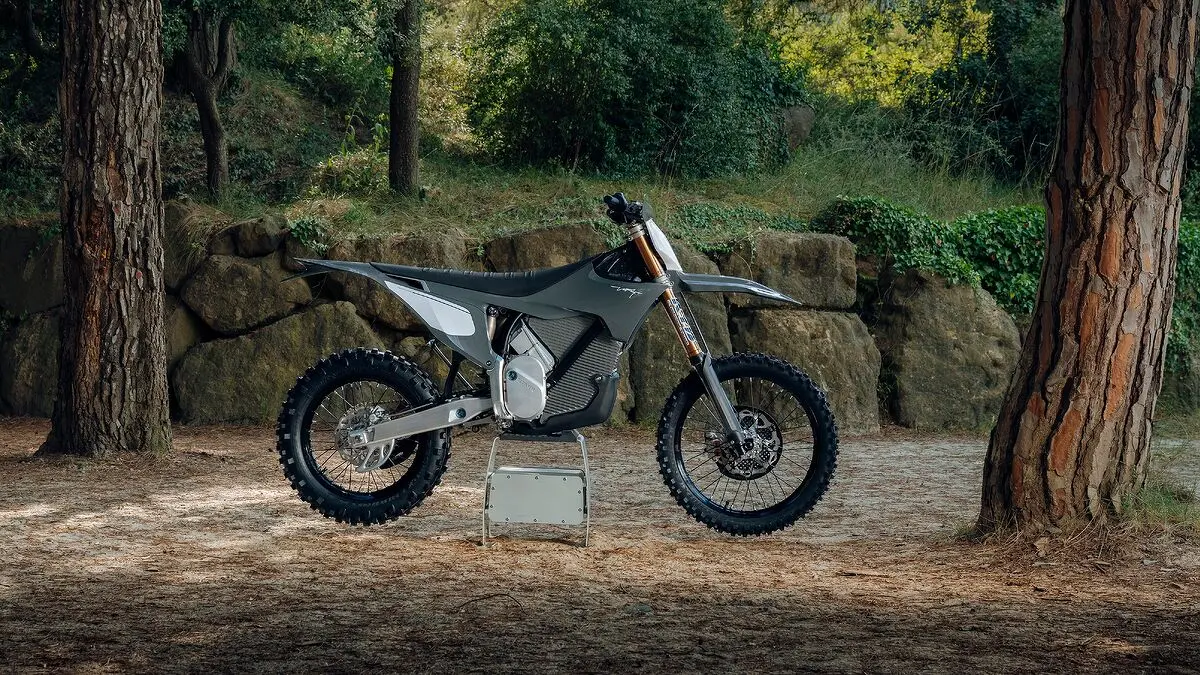
- Hero image: Stark Future press image published by Motorcycle.com with the results story, optimized for web delivery as WebP by RoostMode. It is a manufacturer press photograph, not a RoostMode photo, and RoostMode has not tested or ridden a Stark motorcycle.
RoostMode has not independently audited or verified any figure in Stark Future’s H1 2026 release. Confirm parts availability, warranty handling, and dealer continuity in your region directly before making a purchase or franchise decision based on these results.
Read next
Electric Dirt Bike Showdown: Sur-Ron vs. KTM vs. Stark Varg
How the VARG MX and EX stack up against their main rivals on specs and price, separate from the company's financial claims.
LiveWire Q2 2026 Results: A Buyer's Read
A contrasting case: audited, SEC-filed numbers from an electric motorcycle maker, losses and cash position included.
Electric Dirt Bike vs. Gas: The Honest Comparison
The ownership tradeoffs that matter regardless of any manufacturer's quarterly numbers.