
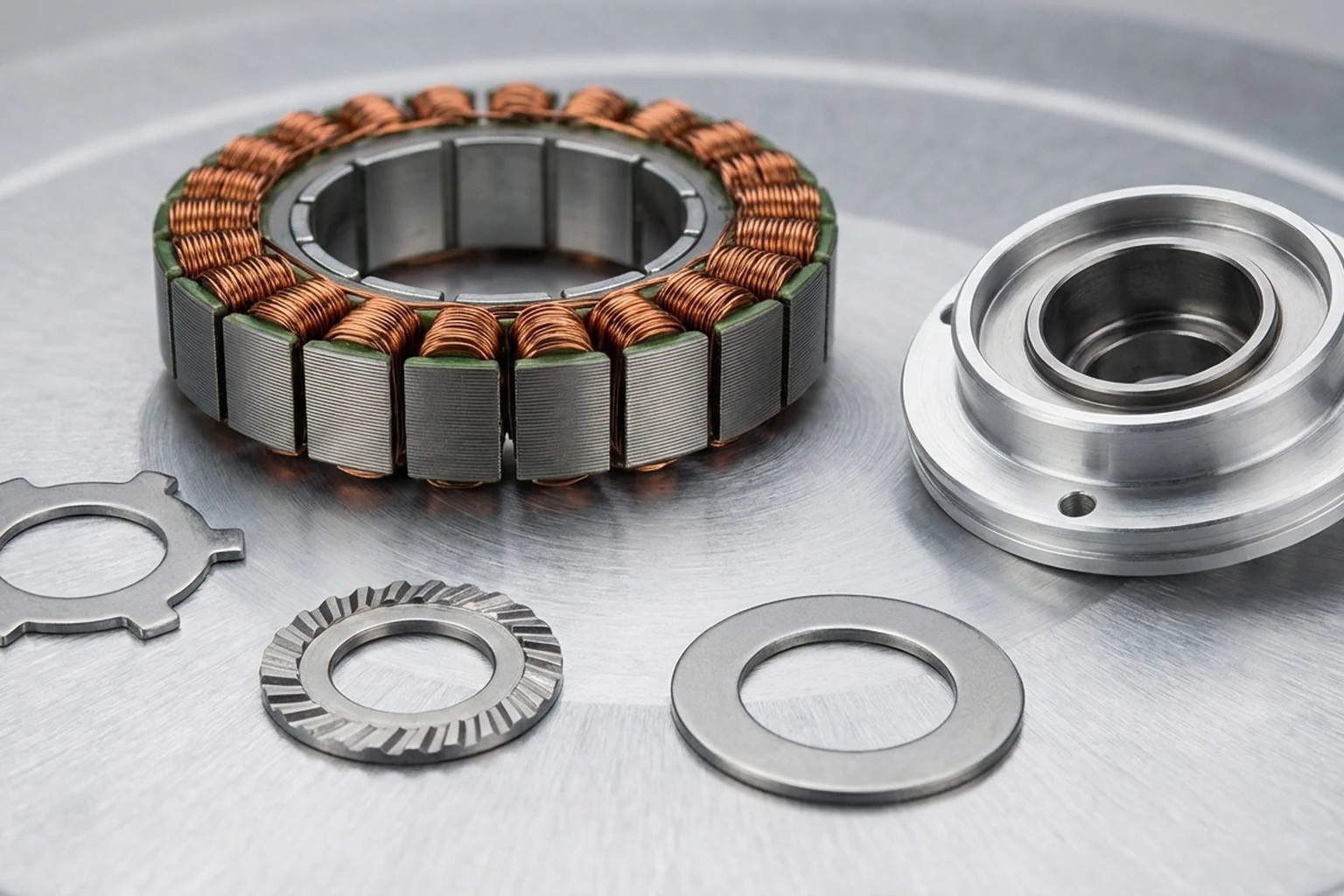
If you’ve ever had your e-bike’s hub motor shift inside the dropout, you know the sinking feeling. That subtle clunk, the misaligned wheel, the creeping worry that something expensive is about to go wrong. A small, cheap component called a torque washer is designed to prevent exactly that, and MeevrgR’s 2-pack of M14 anti-rotation washers is drawing attention from DIY e-bike builders looking for a simple fix to a common problem.
What’s a Torque Washer and Why Should You Care?
Hub motors generate rotational force. That’s their whole job. But here’s the thing most new e-bike owners don’t think about: all that torque doesn’t just spin your wheel forward. It also tries to spin the motor axle inside your frame’s dropout. Without something to stop that rotation, the axle can gradually work itself loose or, worse, damage your frame.
Torque washers (also called anti-rotation washers) solve this with a dead-simple design. They’re flat metal plates with a tab or notch that locks against the dropout, physically preventing the axle from rotating. No electronics, no moving parts. Just metal stopping metal.
Stock e-bikes from reputable brands usually come with these pre-installed. But if you’re:
- Building a hub motor conversion from a kit
- Replacing a worn-out motor on an older e-bike
- Upgrading from a smaller motor to something with more grunt
- Dealing with a motor that’s already slipped in the dropout
Then you probably need to think about torque washers. And if your kit didn’t come with them (plenty don’t), aftermarket options like the MeevrgR set fill the gap.
The MeevrgR M14 Washers
As reported by ruhrkanal.news, the MeevrgR offering is a straightforward 2-pack designed for M14 axles, which is the standard axle size on most rear hub motors in the 250W to 1000W range. You get one for each side of the axle.
The M14 spec matters. If your motor uses a different axle diameter (some front hub motors use M12, and a few heavy-duty rear motors go up to M16), these won’t fit. Check your axle size before ordering. A caliper or even a ruler held against the flat portion of the axle will tell you what you need.
Why This Matters More Than You Think
Here’s what happens when torque washers fail or aren’t installed:
- Frame damage. The motor axle chews into aluminum dropouts over time. Once that metal is gone, it’s gone. On a steel frame you might get away with it longer, but aluminum frames can crack.
- Loose wheels. A motor that’s shifted even a few millimeters throws off your wheel alignment. You’ll feel it in the handling before you see it.
- Electrical issues. Hub motors have power cables running along the axle. A spinning axle can stress or sever those wires. Replacing a motor cable is not a fun afternoon project.
- Safety risk. In extreme cases, the axle can work completely free of the dropout. You don’t want to think about what that looks like at 25 mph.
The frustrating part? This is a problem that costs under $10 to prevent. Torque washers are one of those parts that seem insignificant until they’re missing.
Installation Tips
Fitting these is a 10-minute job if your wheel is already off the bike. Slide the washer onto the axle with the tab facing outward, then position it so the tab sits flat against the outside edge of the dropout. When you tighten the axle nut, the washer gets sandwiched between the nut and the frame, locked in place.
A few things to keep in mind:
- Make sure the tab actually contacts the dropout. If it’s floating in space, it’s doing nothing.
- Tighten your axle nuts to spec. Over-tightening can deform the washer. Under-tightening defeats the purpose entirely.
- Check them every few months, especially if you ride hard or on rough terrain. A quick visual inspection takes 30 seconds.
The Bottom Line
Torque washers aren’t glamorous. Nobody’s posting about them on Instagram. But they’re the kind of small, boring component that separates a reliable e-bike build from one that slowly shakes itself apart. If you’re running a hub motor conversion or you’ve noticed your rear wheel shifting, a set of M14 anti-rotation washers belongs on your short list of must-have parts. At the price point of a coffee, there’s really no excuse to skip them.