
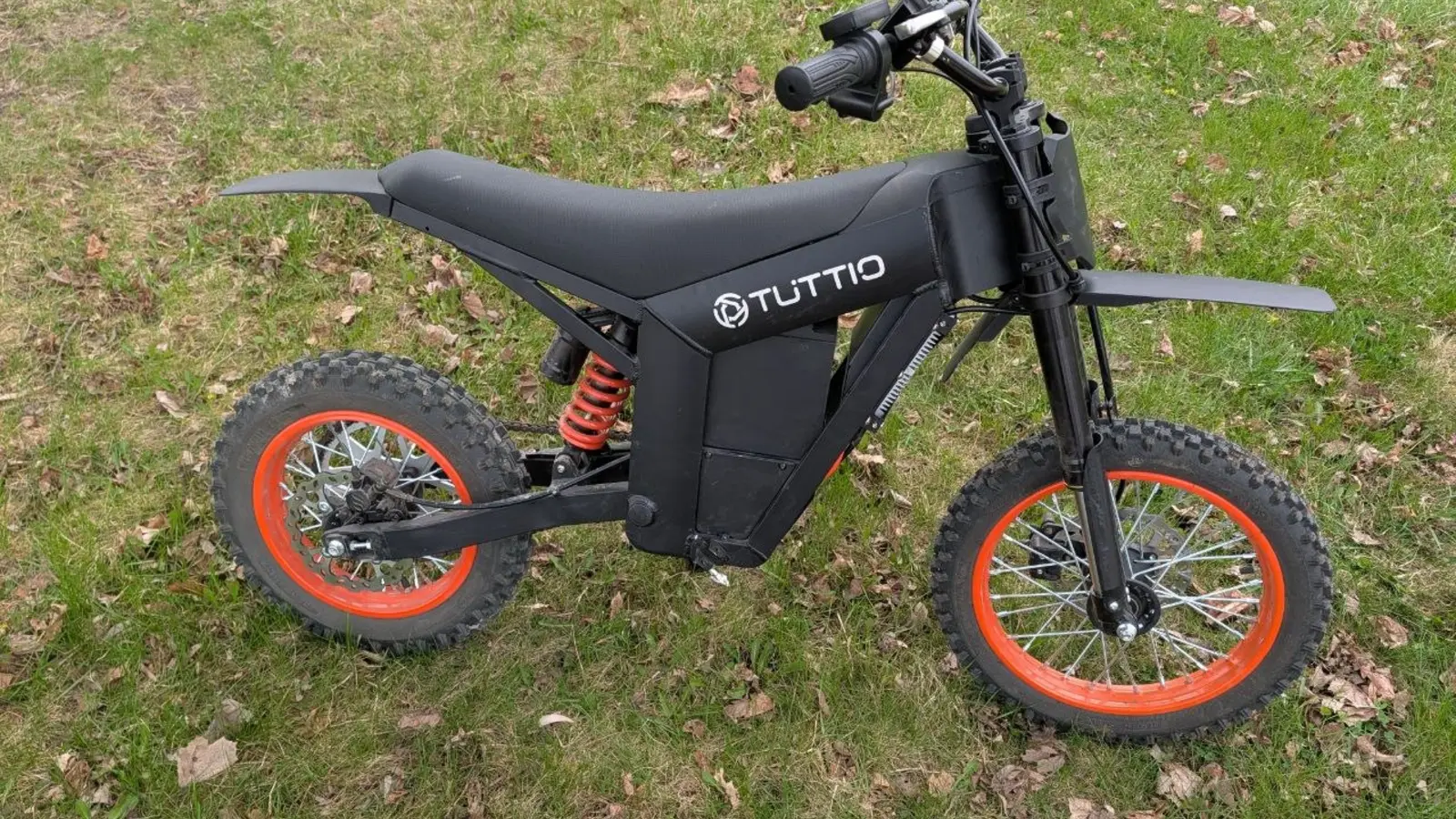
The E-Moto Problem: Why Your Electric Dirt Bike
Might Not Be an E-Bike
The line between e-bikes and e-motos has never been blurrier — and governments are done being confused. From California impound lots to a bipartisan bill in Congress, the classification crackdown is here. If you ride anything with a motor over 750 watts, this matters.
01What Is an E-Moto, Exactly?
There’s no single legal definition yet — that’s a big part of the problem. But here’s the working distinction that regulators, the motorcycle industry, and the bicycle industry are converging on:
An e-bike is a pedal-equipped electric bicycle within the three-class system. Class 1 and 2 top out at 20 mph with motors under 750 watts. Class 3 allows pedal-assisted speeds up to 28 mph. They’re classified as consumer products under federal law, not motor vehicles.
An e-moto is a higher-powered electric two-wheeler that exceeds those limits. Think Sur-Ron Light Bee X, Talaria Sting R MX4, E Ride Pro SS, Segway X260 — bikes with motors ranging from 6,000 to 10,000+ watts and top speeds of 45-62 mph. Some have vestigial pedals. Some don’t. Either way, they perform like motorcycles.
| Vehicle Type | Motor Power | Top Speed | Pedals? | Legal Status |
|---|---|---|---|---|
| Class 1 E-Bike | 250-750W | 20 mph | Yes (required) | Bicycle |
| Class 2 E-Bike | 250-750W | 20 mph | Yes (required) | Bicycle |
| Class 3 E-Bike | 250-750W | 28 mph | Yes (required) | Bicycle* |
| Sur-Ron LBX | 6,000W peak | 46 mph | No | Motor vehicle |
| Talaria Sting R MX4 | 8,000W peak | 50+ mph | No | Motor vehicle |
| E Ride Pro SS | 10,000W peak | 62 mph | No | Motor vehicle |
| Super73-R | 750W | 28 mph | Yes | Class 3 E-Bike |
*Class 3 e-bikes face additional restrictions in some states (helmet requirements, age minimums, limited trail access).
The gap between a 750-watt pedal-assist commuter and a 6,000-watt throttle-powered dirt bike is enormous. But walk into certain retailers or browse Amazon, and you’ll find both sold under the same “e-bike” label. That’s the core of the e-moto problem.
02Why This Is Blowing Up in 2026
E-motos aren’t new. The Sur-Ron Light Bee X has been around for years. So why is everyone suddenly losing their minds about classification?
The numbers caught up. E-bike injuries reportedly doubled every year between 2017 and 2022, according to the sponsors of the Safe SPEEDS Act. Hospital emergency departments started tracking a surge in high-speed electric two-wheeler crashes. Children and teenagers had the highest rates of serious injuries.
The bikes got faster. The original Sur-Ron was a novelty. The current crop of e-motos push 50-60+ mph with motors that rival small gas motorcycles. The Talaria X3 ships with a 6,000W motor, 47 mph top speed, and 55-mile range. That’s not a bicycle by any definition.
The street riding got worse. Long Beach police impounded five e-motos after a 50-rider “ride out” in March 2026 that included wheelies, high speeds, and running stop signs. A woman in Hastings, Minnesota nearly died after a 14-year-old on an e-moto struck her at 25 mph — no charges were filed because the law didn’t know how to classify the vehicle. These aren’t isolated incidents. They’re the stories that move legislators.
The industry itself asked for it. The Motorcycle Industry Council (MIC) sent its CEO to the Bicycle Leadership Conference in March 2026 specifically to address e-moto misclassification. PeopleForBikes, the biggest cycling advocacy group in the country, endorsed federal legislation. When both the motorcycle and bicycle industries agree something needs to change, politicians pay attention.
03The Crackdown Map: Who’s Doing What
This isn’t theoretical. Multiple states are actively writing or enforcing e-moto laws right now.
California
Already enforcing
Section 436.1 classifies any two-wheeled vehicle with handlebars, a straddled seat, and an electric motor designed for off-highway use as an off-highway motorcycle. Green sticker registration required for public land. Street use is illegal without full motorcycle conversion. Cities like Long Beach are actively impounding e-motos.
Minnesota
Bill pending (HF 3785)
Would redefine e-motos as motor vehicles requiring motorcycle licensing. Limits battery-powered top speeds to 20 mph and motor output to 750-1,500W for non-registered vehicles. Could take effect August 2026.
Washington State
Bills introduced
HB 2374 and SB 6110 would classify e-motos and high-powered e-bikes as separate vehicle categories. Includes penalties for manufacturers engaging in deceptive marketing. Declares the situation a state of emergency.
New Jersey
Already enacted
Scrapped the three-class system entirely in late 2025. All e-bikes with motors up to 750W are now 'motorized bicycles' — one flat category requiring helmets for all riders. E-motos face even stricter treatment.
New South Wales (Australia)
Seizure and crushing
New law gives police and transport officers power to seize and crush e-bikes performing like motorbikes. The most aggressive enforcement stance globally.
Federal (Safe SPEEDS Act)
Bill in committee
H.R. 7839 would create the first federal e-moto classification, mandate labeling, and ban bikes sold with easy speed-limit workarounds. Bipartisan support from 4 co-sponsors. Still early, but the most serious federal attempt since 2002.
04The Federal Response: The Safe SPEEDS Act
At the federal level, the Safe SPEEDS Act (H.R. 7839) was introduced on March 25, 2026, by a bipartisan group of four Representatives. It’s the most significant piece of federal e-bike legislation since 2002.
The bill would give the Consumer Product Safety Commission (CPSC) authority to:
- Codify the three-class e-bike system at the federal level for the first time
- Create a formal e-moto classification separate from e-bikes
- Require standardized labeling showing class, speed, motor wattage, and battery capacity
- Ban the sale of bikes that can be easily modified to exceed their rated speed class
- Set minimum age recommendations per vehicle class
- Fund crash data collection broken down by vehicle class
The bill is endorsed by PeopleForBikes, Consumer Reports, the National Bicycle Dealers Association, the League of American Bicyclists, and the International Association of Chiefs of Police. It’s still in committee, but the bipartisan sponsorship gives it a real chance of advancing.
05What the Industry Is Saying
The most striking part of this story is how unified the response has been from industry groups that don’t usually agree on much.
The Motorcycle Industry Council wants e-motos brought into the motorcycle category. MIC CEO Christy LaCurelle called the rise of e-motos “a big opportunity” — more people riding two wheels is a good thing — but emphasized that e-motos need their own regulatory framework, not a borrowed one from the bicycle world.
“The motorcycle industry is working toward a solution so that eMotos can be brought into the motorcycle category and appropriate regulations can be established around them,” LaCurelle said at the Bicycle Leadership Conference in March 2026.
PeopleForBikes wants the distinction between e-bikes and e-motos made crystal clear. Their concern is practical: when high-powered e-motos cause problems — reckless riding, injuries, fires — the backlash hits legitimate e-bike riders. Every crackdown story mentioning “e-bikes” poisons public perception of commuters on Class 1 pedal-assist bikes who aren’t doing anything wrong.
Consumer Reports has documented manufacturers selling bikes labeled as Class 1 while installing motors capable of much higher speeds, and in some cases showing buyers how to unlock restricted performance. They endorsed the Safe SPEEDS Act specifically because it would prohibit this practice.
The message from all sides: e-motos are legitimate vehicles with a real market. But they need to be sold, classified, and regulated as what they actually are — not disguised as something they’re not.
06What This Means for Your Ride
Class 1/2 E-Bike Rider
Mostly positive
Clearer rules protect you from getting lumped in with e-moto crackdowns. Federal classification strengthens your bike's legal standing as a bicycle. The main risk is overly broad local ordinances that don't distinguish between classes.
Class 3 E-Bike Rider
Watch closely
Class 3 sits closest to the regulatory line. Some proposed laws set the e-moto threshold at 750W or 20 mph, which could inadvertently catch your bike. The Safe SPEEDS Act would help by locking in Class 3 as a consumer product at the federal level.
Sur-Ron / Talaria Trail Rider
Mixed — but manageable
If you ride off-road on private land, OHV trails, and MX tracks, not much changes. The crackdown targets street riding and deceptive marketing. Check your state's OHV registration requirements — getting ahead of the rules is smarter than fighting them after the fact.
E-Moto Street Rider
Time to get legal
This is the group facing the most pressure. Unregistered street riding on e-motos is getting enforcement attention nationwide. The window for riding in a legal grey area is closing. Conversion kits, registration, insurance, and a motorcycle endorsement are the path forward.
07How to Protect Yourself Right Now
Whether you’re shopping for your first electric two-wheeler or already own one, here’s what to do today.
If You’re Buying
- Know what you’re actually buying. If it has a motor over 750W, it’s not an e-bike regardless of what the listing says. Check the spec sheet, not the marketing copy.
- Ask about the legal classification. A reputable dealer will tell you upfront whether a bike is classified as an e-bike, OHV, or motor vehicle in your state.
- Be skeptical of “Class 1” labels on powerful bikes. If a bike has a 3,000W+ motor and a 40+ mph top speed but claims to be Class 1, something is wrong. Speed limiters don’t change legal classification.
- Factor in the total cost of legal riding. If you want to ride on streets, budget for conversion ($400-$600), registration ($30-$100/year), insurance ($200-$600/year), and a motorcycle license endorsement ($25-$50).
If You Already Own an E-Moto
- Check your state’s current laws. They may have changed since you bought the bike. Our state-by-state guide is a good starting point, and our street-legal guide covers the conversion process.
- Stop riding on public streets without registration. The enforcement trend is clear and accelerating. This isn’t about being cautious — it’s about not getting your bike impounded.
- Look into OHV registration. Many states offer off-highway vehicle stickers for $25-$75/year. It’s cheap insurance that legitimizes your trail riding.
- Consider a full street-legal conversion. Services like DirtLegal.com handle VIN assignment, titling, and registration for $400-$600. It’s the cleanest path to legal street riding.
08Where This Is Headed
The e-moto problem isn’t going away. If anything, it’s going to intensify through the rest of 2026 and into 2027. Here’s what to watch:
The Safe SPEEDS Act moves through committee. If it passes, expect the CPSC to take 12-18 months to develop actual standards. That means real federal classification is likely a 2027-2028 event at the earliest.
More states will act independently. California and New Jersey have already moved. Minnesota and Washington are close behind. Expect 5-10 more states to introduce e-moto-specific legislation before the end of 2026. States aren’t waiting for Congress.
Manufacturers will self-correct — or get corrected. The Safe SPEEDS Act’s ban on deceptive marketing and easy speed modifications puts manufacturers on notice. Companies that market 5,000W bikes as “e-bikes” are going to face legal liability. Smart brands are already getting ahead of this by clearly classifying their products.
The e-moto market will mature, not die. MIC’s position is telling: they see e-moto riders as future motorcyclists, not as a problem to eliminate. The goal is bringing e-motos into an existing regulatory framework, not banning them. Riders who get registered, insured, and licensed now will be in the best position when the dust settles.
Urban riding parks may become a thing. LaCurelle specifically called for more urban riding spaces as part of the solution. Expect advocacy and investment in dedicated e-moto facilities as a pressure release valve for riders who currently have nowhere legal to ride except private land.
09Sources
- Safe SPEEDS Act — Rep. Dave Min Press Release (March 2026)
- Consumer Reports Endorses Safe SPEEDS Act (March 2026)
- MIC’s Christy LaCurelle at Bicycle Leadership Conference — Cycle News (March 25, 2026)
- Long Beach E-Moto Ride Out — LA Daily News (March 29, 2026)
- Minnesota HF 3785 E-Moto Bill — FOX 9 (March 11, 2026)
- California Section 436.1 — Electric Cycle Rider (March 5, 2026)
- NSW E-Bike Seizure and Crushing Law — NSW Government (March 2026)
- Safe SPEEDS Act Coverage — Electrek (March 30, 2026)
- E-Moto Proposed Law — Star Tribune (March 2026)